

Table of Contents
Ruby has excellent toughness and zero cleavage. This makes it the ultimate colored stone for daily-wear rings. But proper ruby maintenance is rarely a one-size-fits-all process.
There is a difference between standard heat-treated stones and fragile, glass-filled material. So, if you want to keep your jewelry safe, you have to know about the treatment. Here is a simple ruby care guide to cleaning, wearing, and protecting your stones and jewelry.

Ruby's Hardness: One of the Toughest Gems
Ruby is a red corundum and ranks 9 on the Mohs hardness scale, below diamond at 10. Unlike topaz, ruby has absolutely no cleavage. It has excellent toughness, meaning it strongly resists chipping and breaking. This makes ruby one of the best possible choices for daily-wear jewelry.
However, "tough" does not mean "indestructible." A severe impact can still chip a faceted edge, particularly if the stone has surface-reaching fractures. Apt ruby maintenance involves avoiding hard knocks and matching your cleaning method to the stone's specific treatments.

If you are sourcing stones for a new build rather than cleaning an existing piece, a ruby buying guide can come in handy.
Untreated and Heat-Treated Ruby Care
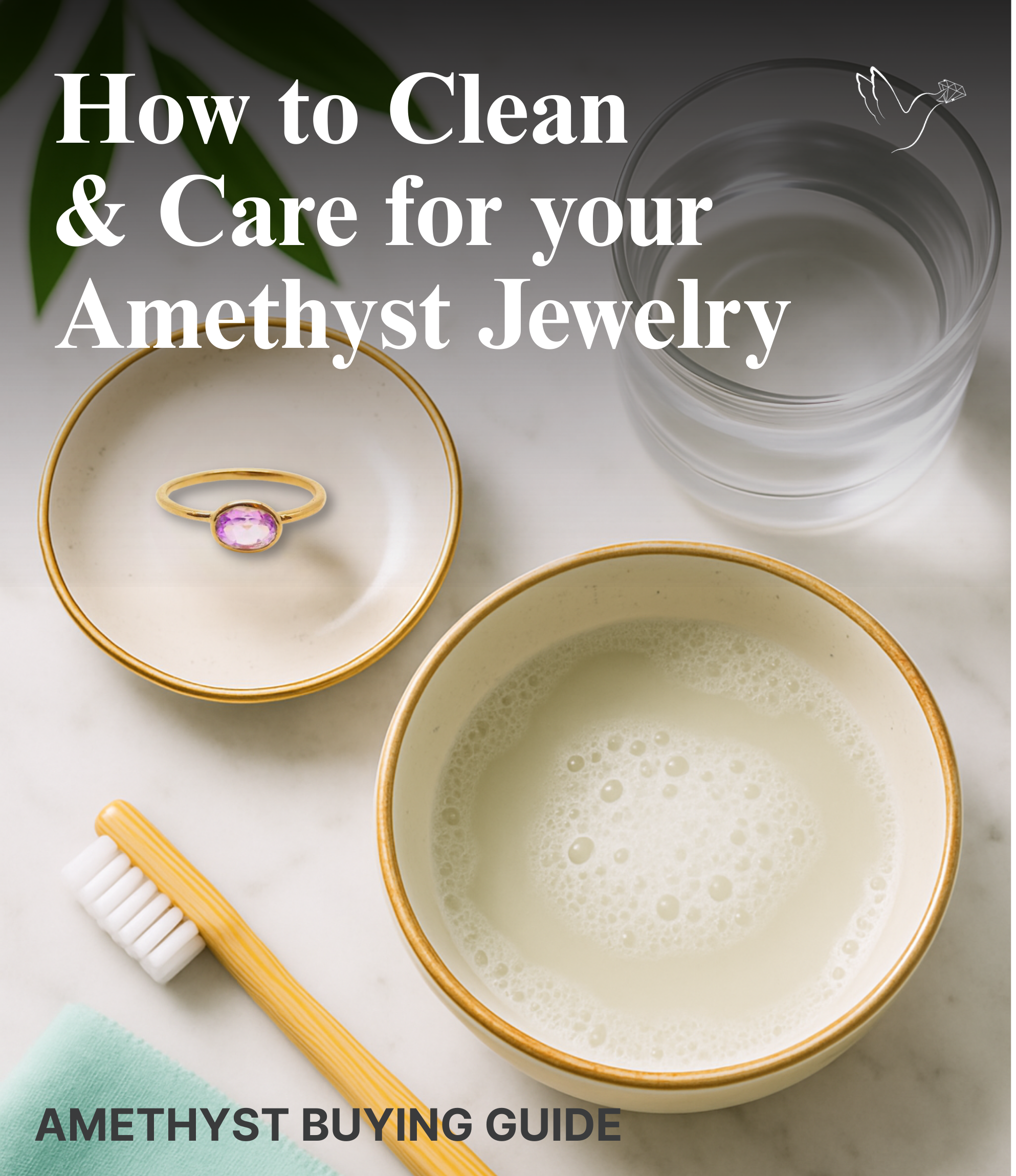
For untreated stones or those with standard heat treatment, learning how to clean ruby is simple:
-
Mix warm water with a few drops of mild soap.
-
Scrub gently around the prongs and pavilion with a soft-bristled brush.
-
Rinse thoroughly and dry with a lint-free cloth.
While ultrasonics are safe for the stone itself, always inspect the piece first. A loose prong in an ultrasonic cleaner will quickly become a missing stone.

Glass-Filled Ruby: The Special Care Category
Glass-filled ruby care requires strict rules. High-lead glass is often melted into lower-grade ruby rough to hide fractures and improve clarity.
The ruby itself is tough, but the glass filler is highly vulnerable.
For known glass-filled ruby:
-
Do not use an ultrasonic cleaner or steam.
-
Keep it away from acids, chlorine, household cleaners, and jewelry dips.
-
Avoid strong heat during cleaning or repair.
-
For routine cleaning, use a soft damp cloth.

|
Bench Warning: If a jeweler applies a torch to a glass-filled ruby during a ring sizing or retipping job without knowing the treatment, the glass will melt and leak out. Always disclose treatment before bench work begins. |
How to Identify Your Ruby Type Before Cleaning
Never guess a ruby's treatment based on how it looks. Glass-filled stones are designed to look exactly like high-end material.
So, start with the original sales receipt or a gemological laboratory report. A trained gemologist can spot glass-filled fractures under a microscope. But it is not a DIY check you can do at home with the naked eye.
If the treatment history is a mystery, use conservative ruby jewelry care. Wipe it with a damp cloth and keep it away from chemicals until a professional checks it.

What to Avoid Across All Rubies
While ruby is a 9 on the Mohs scale, you still need to protect the stone.
-
Avoid hard knocks against tile floors or metal surfaces.
-
Keep all rubies away from strong industrial acids.
-
Never clean an unknown ruby in an ultrasonic machine.

Always evaluate the whole piece. If a ruby is set next to a softer stone, base your cleaning method on the weakest gem.
Daily Wear Tips for Ruby Rings
Ruby is highly suited for daily wear, including engagement rings. However, metal settings still wear down. So remove a ruby ring before construction work, gardening, heavy lifting, or other activities where the setting could take a direct hit.
Check the setting periodically, especially on rings worn every day. A worn or lifted prong can put the stone at risk even when the ruby is sound. Having a jeweler inspect your prongs once a year is the smartest piece of ruby maintenance you can do.

How to Store Ruby Jewelry
Because ruby is a Mohs 9, it will scratch almost anything it touches in your jewelry box.
It can even scratch other rubies and sapphires (which are also corundum). Only a diamond can easily scratch a ruby.
Never toss a ruby loose into a drawer. Store it in its own soft pouch or a dedicated, lined compartment. Separate storage protects the ruby, neighboring stones, and polished metal surfaces. If you want to know the storage rules for other softer gems, read through the emerald care guide and peridot care guide.

Special Care for Star Rubies
Star rubies are cut as smooth, domed cabochons to display their signature star effect (asterism). They are still corundum and share the same base durability as faceted rubies.
The practical difference is the raised dome, which is more exposed to direct knocks. As a result, a protective setting can make sense for a ring worn often.

|
Note: Star rubies can also be glass-filled. The presence of a star does not automatically mean the stone is untreated. |
Common Ruby Care Mistakes
When learning how to care for ruby, avoid these common mistakes:
-
Assuming all rubies are the same: Hardness does not equal chemical resistance. A glass-filled ruby will survive a scratch test but not a chemical dip.

-
Using ultrasonics without checking: Never drop a ruby with unknown treatments into an ultrasonic cleaner.

-
Using acidic cleaners: Exposing glass-filled stones to strong household cleaners or acids can permanently cloud the filler.

-
Loose storage: Letting a ruby rattle around in a jewelry box next to diamonds or softer gems guarantees permanent scratches.

When to See a Jeweler
Take your jewelry to a professional if you notice:
-
The ruby rattling or spinning in its setting.
-
A bent or completely worn-down prong.
-
A severe chip on the faceted edge.
-
A cloudy, whitish appearance suddenly showing up inside the stone (a clear sign of damaged glass filler).

If a glass-filled ruby turns cloudy, repeated home cleaning will only make it worse. Stop wearing it and have a professional assess the damage.
Parting Thoughts
A well-cut and properly maintained ruby can last lifetimes. But that longevity starts with an honest supplier. With 26+ years of trade experience, Gemstones For Sale cuts strictly for brilliance and full transparency.
We ship fully vetted stones directly from Jaipur to jewelers across the US, UK, Europe, and international markets. Trust us for a reliable supply chain and browse our Ruby collection to find exactly what you need.
FAQ: Ruby Care
Can rubies go in ultrasonic cleaners?
Untreated and standard heat-treated rubies are generally safe in ultrasonic cleaners. However, fracture-filled, dyed, and glass-filled rubies should never go in an ultrasonic. If you do not have treatment paperwork, do not risk it.
Why can't I clean glass-filled ruby the same way?
While the ruby itself is tough, the glass injected into its fractures is incredibly sensitive. Harsh chemicals, high heat, and ultrasonic vibrations will damage or dissolve the filler, radically changing the stone's appearance.
Is a star ruby less durable?
Not inherently. It is still corundum. However, the raised cabochon shape exposes the top of the stone to more direct impacts, so protective settings are recommended for rings.
How do I know if my ruby is glass-filled?
Check the original disclosure or a laboratory report. A trained gemologist may identify filled fractures under magnification. If treatment is unknown, follow conservative ruby jewelry care and avoid ultrasonic, steam, and chemical cleaning.