
































Table of Contents


 Share
Share
Opals are among the most majestic gemstones, which are both a dream and a delicate matter for jewelry makers. Their mesmerizing play of colours and unique internal patterns make it a high-value target for imitation, lab-grown synthetics, and assembled stones.
For jewelry makers, it becomes very crucial to distinguish and identify authentic natural opals from the fakes, lab-grown, and treated stones. One incorrect identification of opal stones for a jewelry maker can turn into customer disappointment, damage in reputation, and defacing the beauty of the piece.

If you are a jewelry maker crafting a custom ring or building a new collection, this comprehensive guide will help you develop an expert eye and walk you through the nuances of opal identification, from distinguishing fake Ethiopian stones to spotting a “harlequin.” This guide will help you make smarter buyer decisions.
Can You Tell a Real Opal Just by Looking at It?
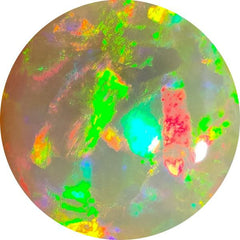
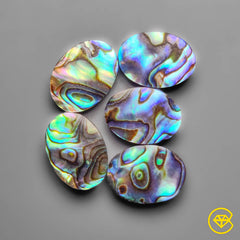
At first glance, not always with certainty, but if you look beyond the surface, the answer is yes. A natural opal is a chaotic masterpiece of nature, reflecting organic fluid play of colour dancing across the surface as you rotate the stone.

However, identification on the basis of appearance alone can prove to be misleading. Lab grown synthetic opals are crafted with high precision to mimic the effects as the same as the natural ones. A well-trained jewelry maker should always look for inconsistencies in patterns combined with other checks as follows:
Identifying the flaws: Lab-grown fakes cannot mimic the silica sphere deposit in the host rock over millions of years. Real opals show slight irregularities with their shape or internal patterns, unlike fakes that look just perfect.

The profiles: A natural opal stone comes with a consistent body colour and structure from top to bottom. Check by turning the stone around on its side. If you see a perfect straight line separating the dark base from the colourful top, you are looking at a fake opal stone.
 What Does a Fake or Synthetic Opal Look Like vs. a Natural One?
The structure and formation are the core when it comes to fake opal vs real opal. Fake opals are generally divided into two different categories: Stimulants (Glass/plastic) and Synthetics (Lab-Grown).
|
Natural Opal |
Synthetic Opal |
Imitations |
|---|---|---|
|
Irregular Flowing Colours |
Repetitive patterns |
Glass, plastic, or raisin with Foil |
|
Feels cool to touch and is uneven |
Are straight and reflect uniform colours |
Colours may look painted and are warm to the touch |
|
Shows minor cracks and are genrally heavey to hold |
Feels lighter and more porous with no cracks |
They scratch more easily and may or may not be light in weight. |
Remember: Keep a sharp eye on the Lizard pattern and columnar structure, nature rarely creates symmetry at that level. Also, request the certificates of trust if the price point looks very affordable.

How Do You Identify an Opal Doublet or Triplet Without Lab Equipment?
Opal doublets and triplets are layered stones, also known as assembled stones. They are produced using backing or capping of thin slices of authentic opals. Often glued to a black industrial glass or ironstone, they mimic the look of an expensive black opal.

Know More : How to Buy Opal for Jewelry Making
Jewelry makers need to spot them to avoid overpaying and ruining jewelry pieces.
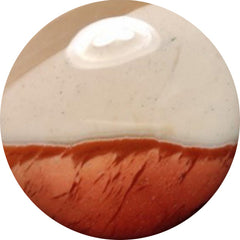
The side profile testing: Glance at the stone from your side. If you can see a clear, straight edged layer where the colour of the stone meets the black base, it is a doublet. Use this as your best weapon to spot the doublets.
Contact Lens effect: Apply the same process as the side profile testing. If the top looks like a transparent cap with a three-layer glued to a clear quartz or plastic dome on the top, it is a triplet.

The Top-Down view: A glassy lustre different from the waxy or resinous lustre of a natural opal is a triplet.
How Can You Tell if an Ethiopian Opal Has Been Smoked or Treated?
Ethiopian opals are naturally beautiful and eye-catching. They are prized for their water absorbing properties and vibrant play of colours, but they are often treated or smoked to mimic the characteristics of rare black opals. 
|
Characteristics |
Natural Ethiopian Opal |
Smoked (Treated) Opal |
|
Body Colour/ Tone |
Mostly white, can be yellow or crystal (Clear) |
Deep black or dark coloured |
|
Saturation |
Colours shown appear to come from within the stone |
Colours looked trapped under the surface of the stone. |
|
Cracks and irregularities |
Consistent colour throughout the stone. |
Carbon deposits settle on tiny surfaces |
The Water test Weapon: Natural and genuine ethopian oplas are hydrophone. It absorbs water. If a treated or smoked opal is soaked in water, its colour might be affected. The changes in colours are not immediate but are affected over time. If the price looks too good to be true, consider it smoked.
Elevate your jewelry creations with our customised range of loose high-quality opal stones for jewelry making to buy online.
What Simple Tools Should a Jewelry Maker Use When Inspecting Loose Opal?
You don’t always need a full gem lab or an expensive multi-dollar spectrometer to protect your investment in genuine opals. Every jewelry maker should have access to these three tools to help verify opal authenticity in their own workshop.
10x Triplet Loupe: Helps you identify and spot the “Lizard skin” of synthetics and the glue line of doublets. A non-negotiable tool for jewelry makers.

Pen light or fibre optic light: Helps you enhance the play of colours and internal structure from multiple angles, highlighting layers.

Digital Scales/Callipers: Synthetics and fakes are often lighter in weight when compared to authentic opals, which are heavy when lifted.

UV Backlight: Long waves of UV backlight show fluorescence that synthetics and fake ones lack.

Pro Tip: You can always choose gemmological lab and advanced spectroscopy or specific gravity tests when it comes to critical high-value pieces.
Where Can You Buy Natural Untreated Opal with Full Disclosure?
Mastering the art of identifying opals is just as important as sourcing genuine opals. At Gemstones for Sale, we build relationships with our buyers based on transparency and trust. For a jewelry maker, your reputation is tied to the stones you set, and we understand that. We find our expertise in sourcing opals ethically and disclosing the details completely to our
buyers. Whether you are seeking the fiery depth of an Australian black opal or the neon glow of natural Ethiopian Welo, we provide the trust you need to craft with confidence.
Ensure every piece you craft is as genuine as your vision!
FAQ:
How can I quickly tell if an opal is real at home?
Check for natural, shifting play-of-colour with irregular patterns rather than uniform designs.
What is the biggest difference between fake opal vs real opal?
Real opals show random depth and colour variation, while fake ones look uniform and repetitive.
Are treated opals less valuable than natural ones?
Yes, treated opals are generally less valuable than natural, untreated stones.
Visited 1300 No. of Time(s), 80 Visit(s) Today





Leave a Comment